Source Portable Digital Blood Glucose Meter for Home, Clinic, and Field Use
Find 30 Portable Digital Blood Glucose Meter options from verified Chinese manufacturers. Compare specifications like sample volume, memory capacity, and certification to select the right blood testing equipment for home monitoring, clinical diagnostics, or field applications.
Key considerations
Products List


Portable Fast Accurate Test Blood Sugar Monitor Glucose Meter with Test Strips
$10.00 - $15.00
MOQ: 1 Pieces


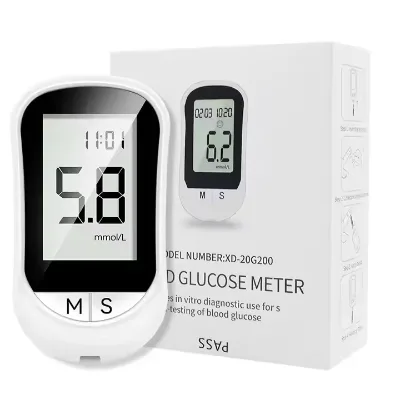
Blood Glucose Meter Electronic Blood Glucose Meter for Monitoring Blood Sugar at Home
$10.00 - $15.00
MOQ: 1 Pieces


Comprehensive Sourcing Guide
Strategic Sourcing Guide for Portable Digital Blood Glucose Meters
The global market for portable digital blood glucose meters continues to expand as diabetes management becomes a critical component of public health strategies. For B2B procurement professionals, sourcing these devices requires a nuanced understanding of technical specifications, regulatory compliance, and supply chain dynamics. This guide provides a structured approach to evaluating potential suppliers and products, ensuring that the selected equipment meets rigorous medical standards while optimizing cost and operational efficiency. The following sections detail the critical factors buyers must assess when procuring blood testing equipment for distribution or institutional use.
Technical Specifications and Operational Performance
When evaluating portable digital blood glucose meters, the primary focus must be on the device's ability to deliver accurate, rapid results with minimal user error. The core functionality revolves around the measurement of blood glucose levels, typically utilizing capillary whole blood or venous whole blood samples. Buyers should verify the specific blood volume required for testing, as this directly impacts user comfort and sample collection success rates. Available data indicates that certain models operate with a blood volume requirement of approximately 0.6μl, while others may require 0.5μl. A lower volume requirement often correlates with a more user-friendly experience, particularly for elderly populations or those with limited dexterity.
The speed of the test result is another critical performance metric. In a clinical or home-monitoring setting, rapid results are essential for timely decision-making. Specifications suggest that high-performance units can provide results within 5 seconds. This rapid turnaround is achieved through advanced enzymatic reaction technologies and optimized microprocessor algorithms. Furthermore, the calibration method is a vital technical consideration. Many modern devices utilize plasma equivalent calibration, which aligns the meter's readings with laboratory standards, ensuring consistency across different testing environments.
Power management and physical design also play significant roles in the device's utility. The power source is typically electricity, supplied via a removable battery, which allows for easy replacement and maintenance. Some models are designed with a single button interface to simplify operation, reducing the cognitive load on the user. The physical dimensions of the device, such as a standard footprint of roughly 965518 mm, contribute to its portability. Additionally, the device's memory capacity, with some units storing up to 300 groups of memory, is crucial for tracking long-term glucose trends. Buyers must ensure that the memory storage is sufficient for the intended user base and that the data retrieval process is intuitive.
Regulatory Compliance and Certification Verification
Navigating the regulatory landscape is perhaps the most critical aspect of sourcing medical devices. Blood glucose meters are classified as medical equipment, and their compliance with international standards is non-negotiable. The product classification often falls under "Biological Diagnostics" or "Physiological Functions of Diagnosis and Monitoring Equipment," and they are frequently categorized as Class II instruments. This classification dictates the level of scrutiny required during the approval process.
Certifications serve as the primary evidence of compliance. Buyers must demand proof of valid certifications from recognized bodies. The supplied data highlights several key certifications, including ISOCE, CE, and FDA. The presence of ISOCE indicates adherence to specific international quality management standards, while CE marking confirms compliance with European Union health, safety, and environmental protection standards. FDA registration is essential for products intended for the United States market. It is imperative to verify that these certifications are current and applicable to the specific model number being procured. For instance, a model number like GT147-904 or UW-BG-710 may have different certification statuses depending on the manufacturing batch and regional regulations.
Furthermore, the origin of the product influences the regulatory pathway. Many devices are manufactured in China, with specific production hubs in regions like Hebei. While the country of origin is not a barrier to entry, it necessitates a thorough review of the manufacturer's quality management system. Buyers should request documentation proving that the manufacturing facility adheres to ISO 13485 standards, which is the international standard for medical device quality management. Although this standard is often cited as a background expectation, it must be explicitly verified through audit reports or certificates of conformity.
Cost Drivers and Pricing Dynamics
Understanding the cost structure of portable blood glucose meters is essential for developing a competitive procurement strategy. The observed price range in the market spans from $0.17 to $25 USD, a significant variance that reflects differences in technology, certification levels, and order volumes. The lower end of this spectrum typically represents basic models or bulk components, while the higher end includes devices with advanced features, extended warranties, or specialized packaging.
The Minimum Order Quantity (MOQ) is a major factor influencing the unit cost. The observed MOQ range varies from 1 to 2000 units. Buyers with smaller budgets or those testing a new market may find suppliers with low MOQs attractive, though the per-unit cost will likely be higher. Conversely, large-scale procurement can leverage economies of scale to reduce the unit price significantly. However, buyers must balance cost savings against the risk of inventory obsolescence.
Other cost drivers include the type of packaging and the inclusion of consumables. Some products are sold as standalone units, while others come in standard export cartons or color boxes that include test strips. The specification "50PCS One Box" for test paper indicates that consumables are often bundled, which affects the total landed cost. Additionally, the customization options available, such as custom colors or branding, can add to the manufacturing cost. Buyers should clearly define their requirements for customization early in the negotiation process to avoid unexpected price escalations.
Typical Applications and User Demographics
The application of portable digital blood glucose meters extends beyond simple home monitoring. These devices are designed for a wide range of settings, including hospitals, clinics, nursing homes, and home care environments. The target demographic is often "Middle-aged and Old," as these groups have a higher prevalence of diabetes and require regular monitoring. The design of the device must account for the specific needs of this demographic, such as large displays, simple interfaces, and robust build quality.
The usage mode is strictly "For External Use," meaning the device is intended for non-invasive or minimally invasive testing on the human body. The sample type is typically capillary whole blood, obtained via a finger prick, though some advanced systems support venous whole blood samples. This versatility allows the device to be used in various clinical scenarios, from routine home checks to more formal diagnostic procedures.
The "Nature" of the product, whether it is customized or non-customized, also dictates its application. Customized models are often used by healthcare providers who wish to brand the device for their specific patient population or integrate it into a broader health management system. Non-customized models are suitable for general distribution and retail. The warranty terms, such as a "One Year and Whole Life Repair Service," are particularly important for institutional buyers who require long-term reliability and support.
Supplier Evaluation and Quality Assurance
Selecting the right supplier is as important as selecting the right product. Buyers should evaluate potential suppliers based on their production capacity, quality control processes, and after-sales support. The availability of customization is a key indicator of a supplier's flexibility and technical capability. Suppliers that offer "Customized" options demonstrate a higher level of engineering expertise and can tailor products to specific market needs.
Quality assurance should be a central part of the supplier evaluation process. Buyers must verify that the supplier has a robust quality management system in place. This includes regular testing of raw materials, in-process quality checks, and final product inspections. The "Product Net Weight" of approximately 40g is a standard specification that can be used to verify the consistency of the manufacturing process. Significant deviations from this weight could indicate quality issues or the use of inferior materials.
The packaging standards are another critical area for evaluation. The use of "CTN" (Carton) or "1PC/Color Box" packaging must be consistent and durable to protect the device during transit. The standard export carton ensures that the products are protected from moisture, dust, and physical damage. Buyers should request samples of the packaging to verify its quality and suitability for their logistics requirements.
Long-Term Procurement Considerations
Sourcing medical devices is a long-term commitment that requires careful planning and risk management. The warranty terms, such as "One Year and Whole Life Repair Service," provide a safety net for buyers, but they also imply a long-term relationship with the supplier. Buyers should assess the supplier's ability to provide spare parts and technical support over the life of the product.
The supply chain stability is another critical factor. The lead time and production capacity of the supplier must be sufficient to meet demand fluctuations. The observed data suggests that some models have specific model numbers like MS-GL100 or MS-GL200, which may have different production schedules. Buyers should establish clear communication channels with the supplier to ensure timely updates on production status and potential delays.
Finally, buyers should consider the future-proofing of their procurement strategy. As technology evolves, the demand for more advanced features, such as wireless connectivity or integration with mobile health apps, may increase. Suppliers that are committed to innovation and continuous improvement will be better positioned to meet these future needs. By maintaining a strategic relationship with a reliable supplier, buyers can ensure a steady supply of high-quality blood glucose meters that meet the evolving needs of their customers.
Comparative Analysis of Key Product Attributes
To facilitate a clearer understanding of the market offerings, the following table summarizes the key attributes observed in the supplied product data. This comparison highlights the diversity in specifications, certifications, and packaging options available to buyers.
| Attribute | Observation 1 | Observation 2 | Observation 3 | Observation 4 |
|---|---|---|---|---|
| Model Number | GT147-904 | Cms20b | Bm-Bgm01 | UW-BG-710 |
| Certification | ISOCE | CE | FDA, ISOCE | CE |
| Blood Volume | 0.5μl | 0.6μl | 0.6μl | N/A |
| Result Time | 5 Seconds | N/A | N/A | N/A |
| Memory | 300 Groups | N/A | N/A | N/A |
| Battery | Single Button | Removable | N/A | N/A |
| Packing | CTN | Carton | PCS/CTN | 1PC/Color Box |
| Origin | China | Hebei, China | N/A | N/A |
| Customization | Available | Customized | Non-Customized | N/A |
| Classification | Biological Diagnostics | Class II | Human Health Analyzer | Blood Glucose Meter |
This table illustrates that while there is a common thread of functionality, the specific attributes vary significantly between models. Buyers must carefully match these attributes to their specific requirements, ensuring that the selected device meets the necessary technical and regulatory standards for their target market. By adhering to the guidelines outlined in this guide, procurement professionals can make informed decisions that balance cost, quality, and compliance.
FAQs
What certifications do portable digital blood glucose meters have?
Many models hold ISOCE, CE, and FDA certifications. These marks indicate compliance with international quality and safety standards for medical devices, ensuring the product meets regulatory requirements for specific markets.
How much blood sample is required for testing?
The device typically requires 0.5 to 0.6 microliters of capillary or venous whole blood. This small volume ensures user comfort and allows for rapid results within five seconds of sample application.
Can the product be customized for specific needs?
Customization is available for certain models with options for colors and branding. Buyers should verify if the specific model number supports custom orders before finalizing procurement plans.
What is the memory capacity of the meter?
Some units store up to 300 groups of memory for tracking glucose trends. This capacity helps users and healthcare providers monitor long-term health data effectively without manual record-keeping.
Where are these devices manufactured?
Products originate from China, with specific production hubs located in Hebei. This location influences shipping logistics and regulatory pathways for international buyers sourcing these medical devices.
What is the warranty coverage for the equipment?
Warranty terms include one year coverage and whole-life repair services. This ensures long-term reliability and support for institutional buyers or distributors requiring sustained operational uptime.